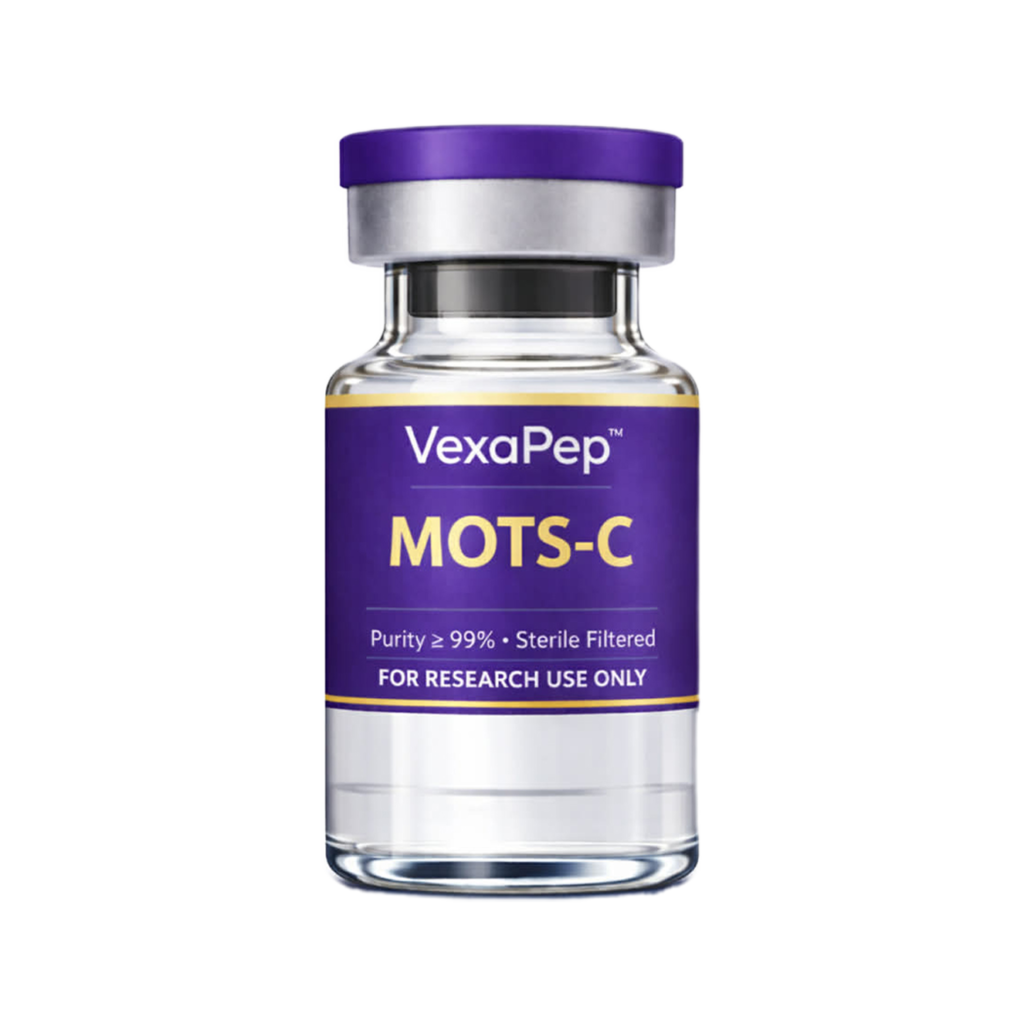
What is the MOTS-c Peptide?
The MOTS-c peptide (Mitochondrial Open Reading Frame of the 12S rRNA Type-c) represents a groundbreaking class of signaling vectors known as mitochondrial-derived peptides. Composed of a distinct 16-amino acid sequence, the MOTS-c peptide translocates from the mitochondria to the cellular nucleus in response to metabolic stress, functioning as an active nuclear modifier of gene expression.
The primary mechanism of action of the MOTS-c peptide relies on its capacity to activate the AMPK (AMP-activated protein kinase) pathway and increase the accumulation of 5-aminoimidazole-4-carboxamide ribonucleotide (AICAR). This cellular shift downregulates the expression of key enzymes involved in sphingolipid, monoacylglycerol, and dicarboxylic acid metabolism. By acting as an autonomous metabolic hormone, this peptide serves as a primary asset for researching systemic insulin sensitivity, adaptive mitochondrial biogenesis, and energy expenditure signaling.
Key Scientific Applications & Research Benefits
In laboratory models, metabolic syndrome frameworks, and cellular longevity studies, the MOTS-c peptide is extensively evaluated for its distinct biochemical mechanisms:
1. Activation of the AMPK Axis and Glucose Homeostasis
Research indicates that the MOTS-c peptide robustly stimulates AMPK phosphorylation, a master regulator of cellular energy balance. This activation drives the upregulation of glucose transporter 4 (GLUT4) translocation, facilitating direct glucose uptake and clearance into skeletal muscle cells independent of standard endocrine pathways.
2. Prevention of Diet-Induced Metabolic Shifting and Obesity Research
In animal evaluation models, MOTS-c demonstrates a profound ability to combat high-fat diet-induced weight accumulation. Scientific literature highlights its role in promoting lipid oxidation, preventing hepatic fat accumulation (steatosis), and altering baseline systemic metabolic rates while prioritizing lean tissue architecture.
3. Up-regulation of Mitochondrial Biogenesis and Fitness Longevity
Mitochondrial capacity and density naturally degrade over prolonged biological lifespans. The MOTS-c peptide actively coordinates mitochondrial biogenesis by increasing the expression of peroxisome proliferator-activated receptor-gamma coactivator 1-alpha (PGC-1α), allowing researchers to observe the reversal of age-associated physiological performance decline.
4. Modulation of Cellular Stress Responses and Lifespan Profiles
As a critical survival signal, MOTS-c responds dynamically to metabolic deficiencies. It reprograms cellular nutrient-sensing networks to favor stress resistance, offering essential baseline data regarding chronological survival rates, cellular senescence management, and cellular longevity charting.
Technical Specifications & Laboratory Guidelines
Every 10mg vial is manufactured under strict quality assurance parameters to protect your experimental integrity and guarantee precise reproducibility:
- CAS Number: 1627503-60-1
- Molecular Formula: C101H152N28O22S2
- Molecular Mass: 2174.6 g/mol
- Purity Profile: ≥98% via High-Performance Liquid Chromatography (HPLC)
- Storage Conditions: Lyophilized powder remains structurally stable at room temperature for up to 90 days. For long-term preservation, store at -20°C. Following reconstitution with sterile BAC water, store tightly refrigerated at 2°C–8°C and utilize within 21 days to protect against active compound degradation or oxidation.
Disclaimer: This product is synthesized, manufactured, and distributed strictly for laboratory research, in vitro diagnostic evaluation, and scientific analysis. It is not approved or intended for direct human therapeutic use, cosmetic applications, or consumer ingestion.




Reviews
There are no reviews yet.