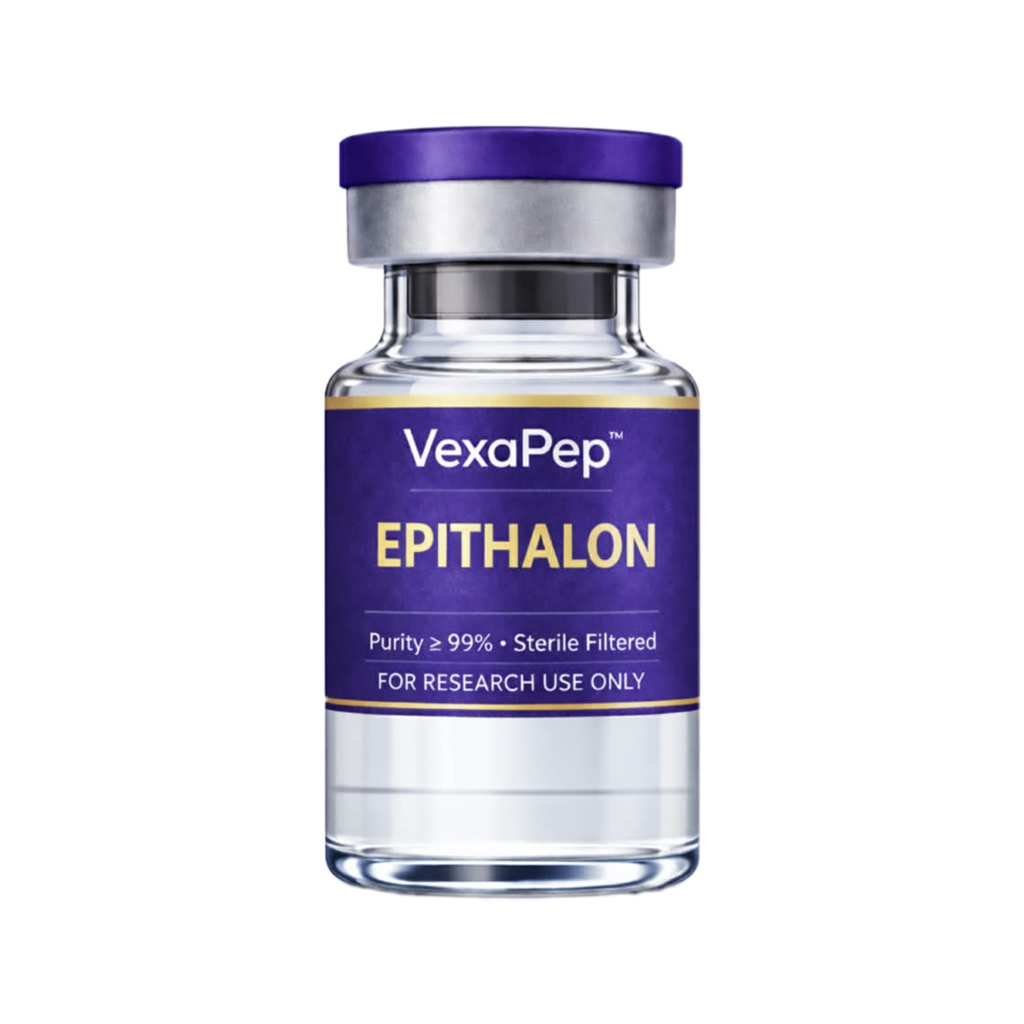
What is the Epithalon Peptide?
The Epithalon peptide (also known as Epitalon) is an advanced synthetic sequence consisting of four amino acids (L-alanyl-L-glutamyl-L-aspartyl-glycine). It was originally developed to replicate the biological activity of epithalamin, a peptide extract isolated from the pineal gland.
The primary mechanism of action of the Epithalon peptide revolves around its unique capacity to bind to specific promoter regions on DNA, prompting the reactivation and upregulation of the telomerase enzyme. By facilitating the elongation of telomeres—the protective caps at the terminal ends of chromosomes—this peptide serves as a primary asset for researching the mitigation of cellular senescence and the extension of biological replication boundaries.
Key Scientific Applications & Research Benefits
In laboratory models, gerontological frameworks, and cellular longevity studies, the Epithalon peptide is extensively evaluated for its distinct biochemical mechanisms:
1. Activation of Telomerase and Chromosomal Protection
Research indicates that the Epithalon peptide overcomes the Hayflick limit in cellular cultures by inducing telomerase expression. This activation allows senescent or aging cells to actively repair and lengthen shortened telomeres, reducing structural DNA degradation metrics and stabilizing chromosomal architecture during replication.
2. Suppression of Onco-genic Pathways and Cellular Proliferation
Beyond its longevity profile, scientific literature highlights the capacity of Epithalon to regulate key anticarcinogenic mechanisms. In specific animal models, it is studied for its ability to suppress the expression of certain oncogenes, inhibit spontaneous tumor development, and maintain healthy baseline cellular apoptosis.
3. Pineal Gland Regulation and Circadian Rhythm Synchronization
The pineal gland plays an irreplaceable role in regulating sleep-wake cycles and systemic neuroendocrine function. The Epithalon peptide helps normalize pineal activity, upregulating natural night-time melatonin synthesis and balancing hormonal secretion profiles that typically degrade over prolonged biological lifespans.
4. Potent Antioxidant Defense and Free Radical Scavenging
Accumulated oxidative stress is a core driver of tissue degradation and cellular aging. Epithalon acts as a robust coordinator of endogenous antioxidant defenses, significantly boosting the baseline concentrations of superoxide dismutase (SOD), catalase, and glutathione peroxidase to shield cells from oxidative insults.
Technical Specifications & Laboratory Guidelines
Every 10mg vial is manufactured under strict quality assurance parameters to protect your experimental integrity and guarantee precise reproducibility:
- CAS Number: 307297-39-8
- Molecular Formula: C14H22N4O9
- Molecular Mass: 390.35 g/mol
- Purity Profile: ≥98% via High-Performance Liquid Chromatography (HPLC)
- Storage Conditions: Lyophilized powder remains structurally stable at room temperature for up to 90 days. For long-term preservation, store at -20°C. Following reconstitution with sterile BAC water, store tightly refrigerated at 2°C–8°C and utilize within 30 days to protect against active compound degradation.
Disclaimer: This product is synthesized, manufactured, and distributed strictly for laboratory research, in vitro diagnostic evaluation, and scientific analysis. It is not approved or intended for direct human therapeutic use, cosmetic applications, or consumer ingestion.

Reviews
There are no reviews yet.