What is the BPC-157 Peptide?
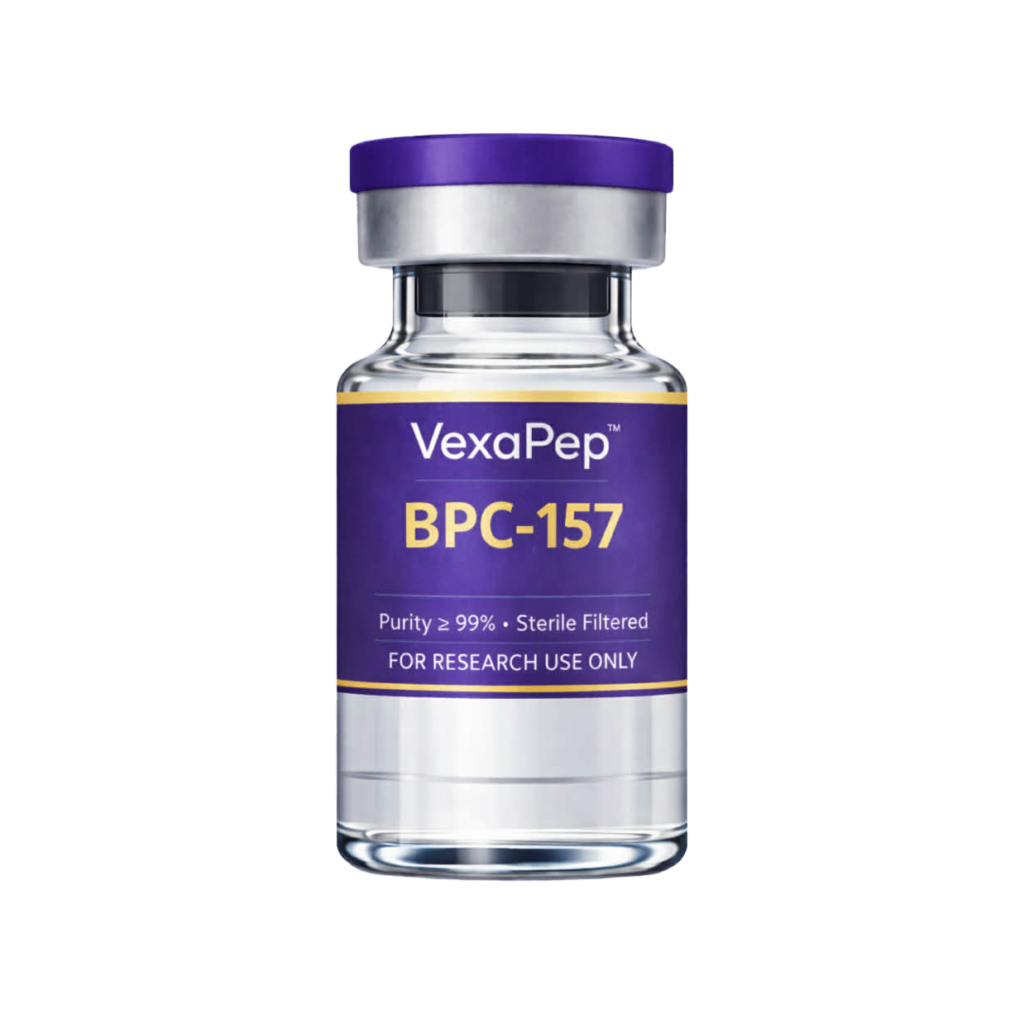
The BPC-157 peptide is an advanced synthetic sequence consisting of 15 amino acids (Gly-Glu-Pro-Pro-Pro-Gly-Lys-Pro-Ala-Asp-Asp-Ala-Gly-Leu-Val). It is modeled after a functional fragment of the native cytoprotective compounds found within human gastric juice.
Unlike standard growth factors, the BPC-157 peptide demonstrates exceptional stability in gastric environments and complex organic solutions. Its primary mechanism of action involves the up-regulation of Growth Hormone Receptors (GHR), the activation of early growth response 1 (Egr-1) gene expression, and the acceleration of vascular endothelial growth factor (VEGF) pathways. This unique profile makes it a primary asset for researching accelerated systemic tissue remodeling and tissue repair mechanisms.
Key Scientific Applications & Research Benefits
In laboratory models, soft-tissue injury frameworks, and cytoprotection studies, the BPC-157 peptide is heavily evaluated for its multi-pathway biological impacts:
1. Acceleration of Tendon, Ligament, and Muscle Repair
Soft tissue injuries typically recover slowly due to a lack of baseline blood flow. Research shows that the BPC-157 peptide significantly enhances the ex vivo growth of tendon fibroblasts, promotes cell survival under stress, and accelerates the healing cascade of transected or detached ligaments, Achilles tendons, and skeletal muscle fibers.
2. Upregulation of Angiogenesis and Vascular Repair
BPC-157 plays a prominent role in promoting angiogenesis—the formation of new blood vessels from pre-existing vasculature. By stimulating the VEGFR2 internal signaling pathway, it assists researchers in analyzing structural endothelial cell proliferation, collateral vessel development, and localized tissue ischemia mitigation.
3. Gastric Mucosal and Inflammatory Bowel Healing
True to its origin as a body protection compound, the BPC-157 peptide is widely studied for its profound cytoprotective properties within the gastrointestinal tract. Scientific literature highlights its capacity to stabilize the gut mucosal barrier, counteract NSAID-induced gastric ulceration, and modulate inflammatory pathways associated with Crohn’s disease and ulcerative colitis models.
4. Neuroprotective Axis and Nitric Oxide Modulation
Emerging scientific data indicates that BPC-157 interacts dynamically with the nitric oxide (NO) system to regulate vascular tone and protect endothelial integrity. Furthermore, it is evaluated in neuroprotective frameworks for its potential to safeguard central and peripheral neural pathways following acute physical trauma or toxic insults.
Technical Specifications & Laboratory Guidelines
Every batch undergoes strict analytical testing protocols to safeguard your experimental integrity and ensure precise reproducibility:
- CAS Number: 137525-51-0
- Molecular Formula: C62H98N16O22
- Molecular Mass: 1419.56 g/mol
- Purity Profile: ≥98% via High-Performance Liquid Chromatography (HPLC)
- Storage Conditions: Lyophilized powder remains structurally stable at room temperature for up to 90 days. For long-term preservation, store at -20°C. Following reconstitution with sterile bacteriostatic water, store tightly refrigerated at 2°C–8°C and use within 30 days to protect against active peptide degradation.
Disclaimer: This product is synthesized, manufactured, and distributed strictly for laboratory research, in vitro diagnostic evaluation, and scientific analysis. It is not approved or intended for direct human therapeutic use, cosmetic applications, or consumer ingestion.
Reviews
There are no reviews yet.