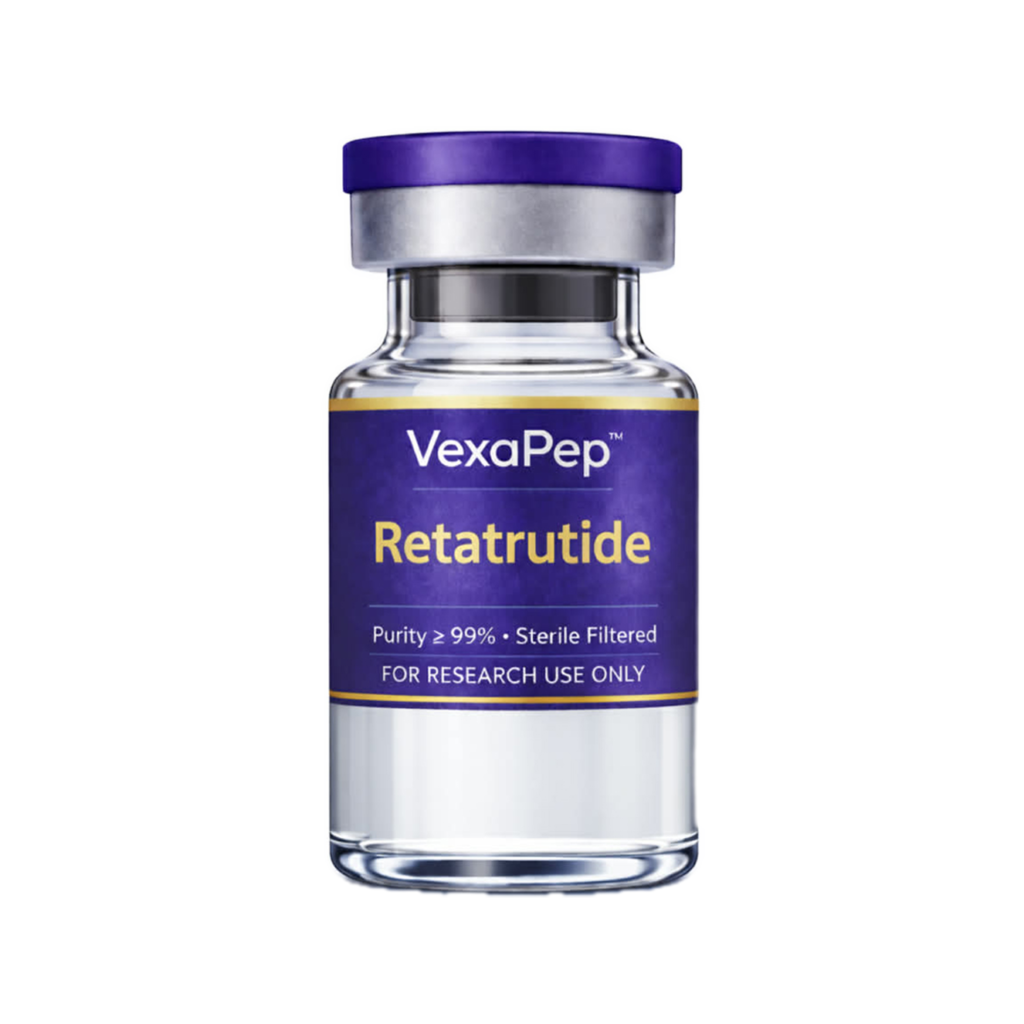
What is the Retatrutide Peptide?
The Retatrutide peptide (frequently designated as LY3437943 in chemical literature) is a cutting-edge synthetic peptide backbone modified with a C18 fatty diacid moiety. Based on the native gastric inhibitory polypeptide (GIP) sequence, its unique structural engineering allows it to bind simultaneously to three distinct metabolic receptors: GIP, GLP-1 (glucagon-like peptide-1), and GCGR (glucagon receptor).
The primary mechanism of action of the Retatrutide peptide relies on this powerful triple-receptor synergy. While standard single or dual-incretin mimetics focus primarily on insulinotropic pathways, Retatrutide integrates glucagon receptor activation. This inclusion drives direct up-regulation of energy expenditure, stimulates thermogenesis, and targets hepatic lipid clearance mechanisms. By serving as an autonomous multi-receptor coordinator, this peptide functions as an elite asset for researching advanced insulin sensitivity and intensive metabolic remodeling.
Key Scientific Applications & Research Benefits
In laboratory models, diet-induced obesity frameworks, and glycemic control studies, the Retatrutide peptide is extensively evaluated for its distinct biochemical mechanisms:
1. Coordinated Triple Agonism and Advanced Glycemic Control
Research indicates that the Retatrutide peptide exerts a highly potent, glucose-dependent insulinotropic effect via GIP and GLP-1 pathways. Concurrently, its glucagon receptor affinity balances insulin secretion kinetics, allowing researchers to observe robust glucose homeostatic shifts and hemoglobin A1c reduction simulations without triggering baseline hypoglycemia profiles.
2. Upregulation of Energy Expenditure and Thermogenesis
Traditional metabolic research vectors often hit a plateau due to the body lowering its resting metabolic rate during calorie restriction. Because Retatrutide incorporates glucagon receptor activation, it prevents this drop by stimulating brown adipose tissue thermogenesis, allowing researchers to study sustained, accelerated energy expenditure models.
3. Intracellular Adipose Oxidation and Hepatic Fat Clearance
Non-alcoholic fatty liver states represent a major bottleneck in metabolic recovery. Scientific literature highlights the capacity of the Retatrutide peptide to reduce intrahepatic fat content dramatically in animal models, optimizing fatty acid beta-oxidation within hepatocytes while accelerating systemic lipolysis.
4. Satiety Signaling Modulations and Delayed Gastric Emptying
By mimicking systemic incretin hormones, Retatrutide cross-reacts with neuro-endocrine signaling axes within the hypothalamus. This interaction decreases central nervous system hunger signals and slows gastric motility metrics, providing critical baseline data for studying chronic overconsumption behaviors and nutrient-sensing adaptations.
Technical Specifications & Laboratory Guidelines
Every 10mg vial is manufactured under strict quality assurance parameters to protect your experimental integrity and guarantee precise reproducibility:
- Alternative Designations: LY3437943
- Molecular Formula: C223H336N46O70
- Molecular Mass: 4733.33 g/mol
- Purity Profile: ≥98% via High-Performance Liquid Chromatography (HPLC)
- Storage Conditions: Lyophilized powder remains structurally stable at room temperature for up to 90 days. For long-term preservation, store at -20°C. Following reconstitution with sterile BAC water, store tightly refrigerated at 2°C–8°C and utilize within 21 to 28 days to prevent active peptide degradation or side-chain oxidation.
Disclaimer: This product is synthesized, manufactured, and distributed strictly for laboratory research, in vitro diagnostic evaluation, and scientific analysis. It is not approved or intended for direct human therapeutic use, cosmetic applications, or consumer ingestion.

Reviews
There are no reviews yet.