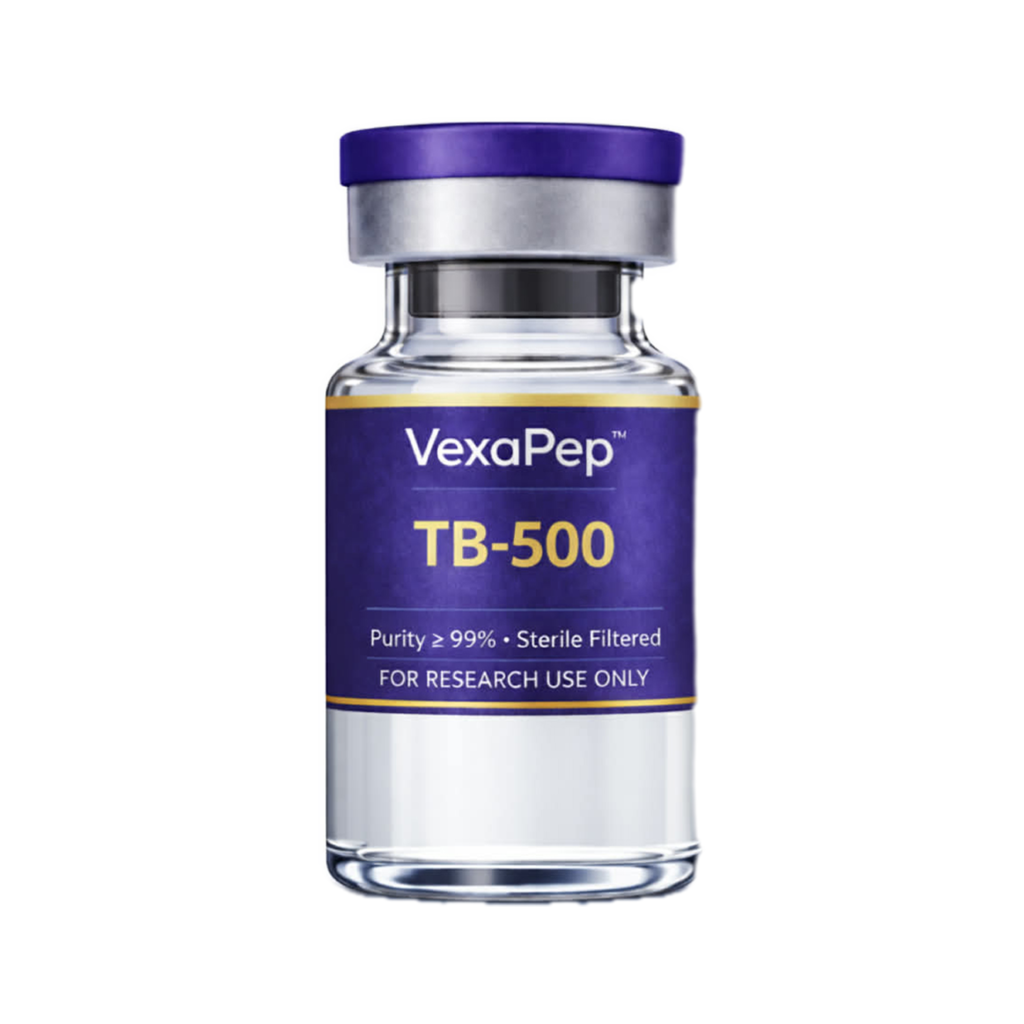
What is the TB-500 Peptide?
The TB-500 peptide is a heavy-duty synthetic fraction corresponding to the functional domain of Thymosin Beta-4, a naturally occurring 43-amino acid peptide found in high concentrations within blood platelets and healing tissues. By isolating the essential binding region responsible for cellular migration, this shorter molecular chain achieves enhanced stability and tissue penetration characteristics in laboratory environments.
The primary mechanism of action of the TB-500 peptide revolves around its unique capability to form a 1:1 complex with globular actin (G-actin). By sequestering G-actin, it controls the baseline pool available for filament polymerization (F-actin), actively driving the cytoskeletal rearrangement necessary for cellular motility. This process coordinates the migration of endothelial cells and dermal fibroblasts to localized tissue defects, serving as a premier asset for researching systemic tissue remodeling and vascular repair cascades.
Key Scientific Applications & Research Benefits
In laboratory models, acute muscle tear frameworks, and soft tissue repair studies, the TB-500 peptide is extensively evaluated for its distinct biochemical mechanisms:
1. Acceleration of Musculoskeletal and Connective Tissue Repair
Injuries to tendons, ligaments, and joints often present sluggish healing cycles due to restricted vascularity. Research indicates that the TB-500 peptide dramatically increases cellular proliferation at the injury site. It stimulates the migration of specialized progenitor cells, accelerating deep structural restoration metrics across transected fibers and compromised joint matrices.
2. Upregulation of Angiogenesis and Microvascular Growth
Restoring deep nutrient supply routes is essential for survival mechanics in injured tissues. The TB-500 peptide promotes angiogenesis—the sprouting of new blood vessels—by stimulating the expression of vascular endothelial growth factors and matrix metalloproteinases. This pathway assists researchers analyzing microvascular density changes during tissue ischemia mitigation.
3. Modulation of Inflammatory Signaling and Collagen Deposition
Unchecked chronic inflammation stalls tissue repair and induces severe fibrotic scarring. Scientific literature highlights the capacity of the TB-500 peptide to balance localized cytokine profiles, suppressing pro-inflammatory cascades while simultaneously optimizing type I and type III collagen cross-linking to ensure flexible, functional tissue alignment over unorganized scar mass.
4. Cardioprotective Signaling and Myocardial Cellular Remodeling
Emerging translational models suggest that Thymosin Beta-4 derivatives offer significant protective support to cardiac tissue architectures. TB-500 is actively featured in ischemia-reperfusion studies, evaluating how targeting actin-sequestering pathways can enhance myocardial cell survival, limit post-infraction tissue remodeling, and preserve mechanical output metrics.
Technical Specifications & Laboratory Guidelines
Every 10mg vial is manufactured under strict quality assurance parameters to protect your experimental integrity and guarantee precise reproducibility:
- CAS Number: 77591-33-4
- Molecular Formula: C141H243N43O47S
- Molecular Mass: 3184.62 g/mol
- Purity Profile: ≥98% via High-Performance Liquid Chromatography (HPLC)
- Storage Conditions: Lyophilized powder remains structurally stable at room temperature for up to 90 days. For long-term preservation, store at -20°C. Following reconstitution with sterile BAC water, store tightly refrigerated at 2°C–8°C and utilize within 30 days to protect against active compound oxidation or structural peptide shifting.
Disclaimer: This product is synthesized, manufactured, and distributed strictly for laboratory research, in vitro diagnostic evaluation, and scientific analysis. It is not approved or intended for direct human therapeutic use, cosmetic applications, or consumer ingestion.

Reviews
There are no reviews yet.