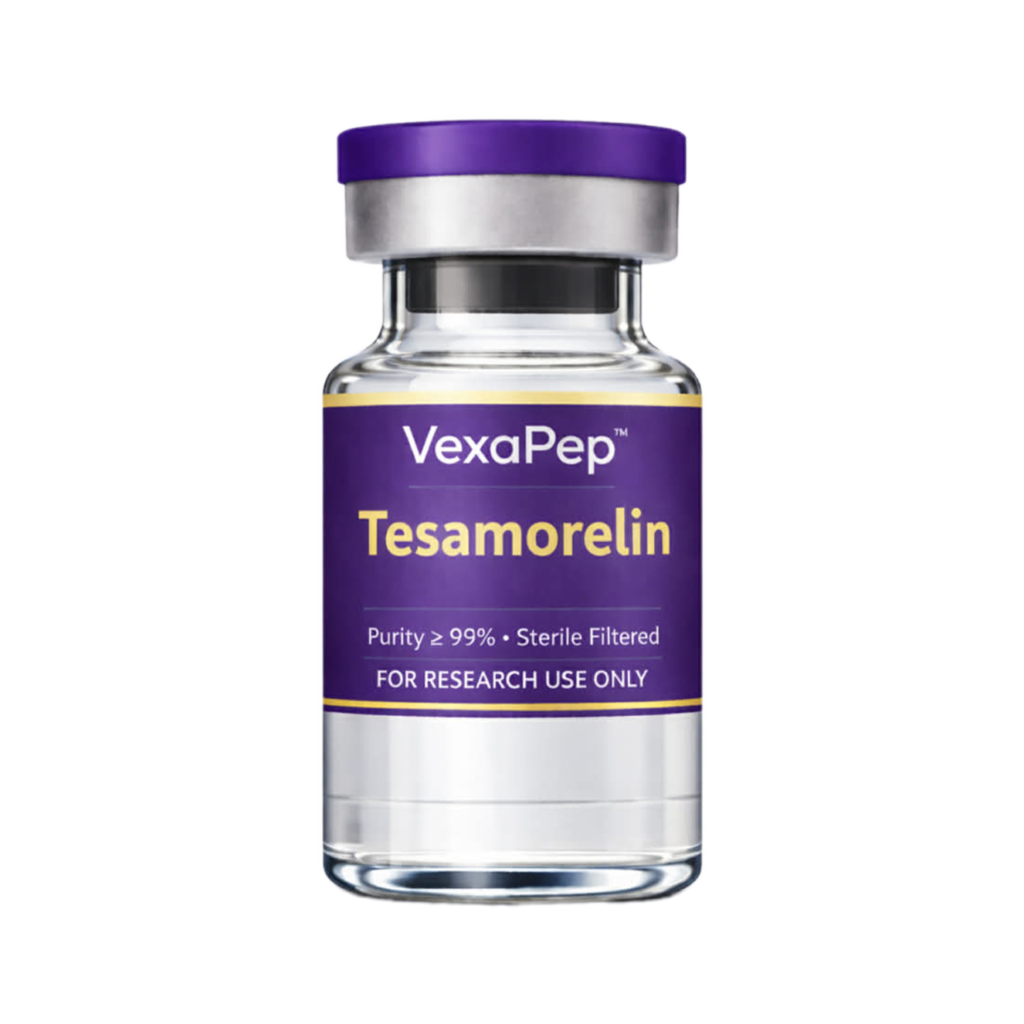
What is the Tesamorelin Peptide?
The Tesamorelin peptide is an advanced synthetic growth hormone secretagogue modeled after native GHRH signaling architecture. By attaching a specialized lipophilic trans-3-hexenoic acid group to its terminal structure, the molecule achieves vastly superior stability and resistance to rapid enzymatic cleavage by dipeptidyl peptidase-4 (DPP-4) compared to the endogenous hormone.
The primary mechanism of action of the Tesamorelin peptide involves its highly selective binding to GHRH receptors on somatotroph cells within the anterior pituitary. This interaction preserves the natural, wave-like pulsatile release of endogenous growth hormone, which subsequently drives the downstream synthesis of Insulin-like Growth Factor 1 (IGF-1). Because it leaves other vital neuroendocrine axes (such as cortisol and glucose homeostatic pathways) undisturbed, this peptide serves as a premier asset for researching tissue-specific metabolic modifications.
Key Scientific Applications & Research Benefits
In laboratory models, lipodystrophy frameworks, and cellular bioenergetics studies, the Tesamorelin peptide is extensively evaluated for its distinct biochemical mechanisms:
1. Selective Reduction of Visceral Adipose Tissue (VAT)
Unlike standard lipolytic agents that non-selectively deplete subcutaneous fat stores, research indicates that the Tesamorelin peptide preferentially triggers the oxidation of deep visceral adipose tissue (VAT). Researchers utilize this compound to map the metabolic pathways governing stubborn abdominal fat accumulation and systemic lipid profile normalization.
2. Upregulation of IGF-1 and Lean Tissue Preservation
By establishing a consistent, physiological elevation of growth factor signaling, Tesamorelin provides critical data regarding accelerated protein synthesis. This mechanism is actively evaluated in cellular models exploring muscle atrophy reversal, deep tissue repair dynamics, and the maintenance of nitrogen retention during catabolic stress.
3. Evaluation of Cardiovascular and Metabolic Risk Factors
Excess visceral adiposity is directly linked to chronic metabolic dysfunction. Scientific literature highlights the capacity of the Tesamorelin peptide to improve overall body composition metrics, allowing researchers to analyze secondary improvements in carotid intima-media thickness, systemic inflammatory markers, and vascular endothelial profiles.
4. Neuroprotective Axis and Cognitive Health Studies
Emerging neurobiological models suggest that GHRH analogs cross-react with central nervous system pathways to provide distinct neurotrophic support. Tesamorelin is currently featured in studies examining mild cognitive impairment (MCI), evaluating how the optimization of the growth hormone-releasing axis impacts hippocampal proteomics and memory preservation.
Technical Specifications & Laboratory Guidelines
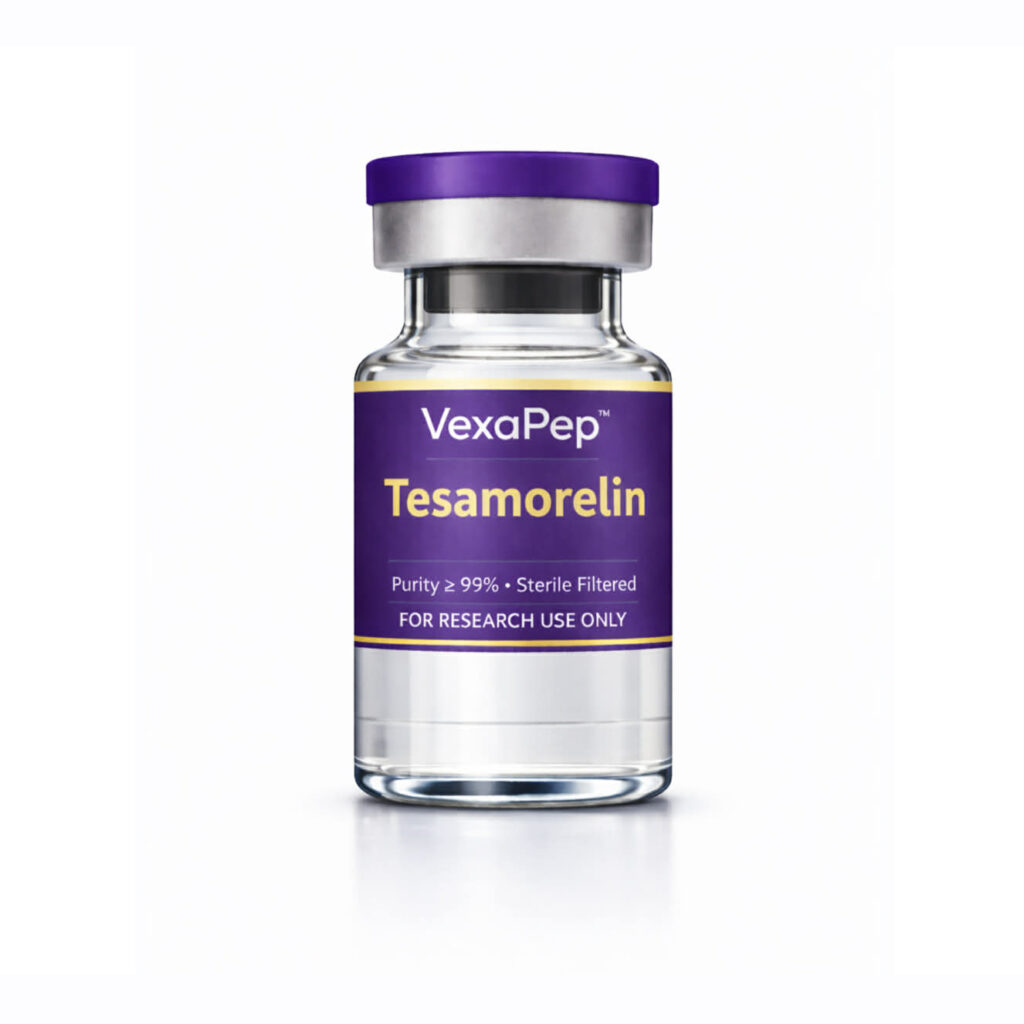
Every 10mg vial is manufactured under strict quality assurance parameters to protect your experimental integrity and guarantee precise reproducibility:
- CAS Number: 218949-48-5
- Molecular Formula: C221H366N72O67S (Base Peptide)
- Molecular Mass: 5135.9 g/mol
- Purity Profile: ≥98% via High-Performance Liquid Chromatography (HPLC)
- Storage Conditions: Lyophilized powder remains structurally stable at room temperature for up to 90 days. For long-term preservation, store at -20°C. Following reconstitution with sterile BAC water, store tightly refrigerated at 2°C–8°C and utilize within 21 days to prevent active compound denaturation or structural peptide degradation.
Disclaimer: This product is synthesized, manufactured, and distributed strictly for laboratory research, in vitro diagnostic evaluation, and scientific analysis. It is not approved or intended for direct human therapeutic use, cosmetic applications, or consumer ingestion.

Reviews
There are no reviews yet.